World Leading Research

At the heart of our formula is a commitment to science. We explore the unique properties of goat milk and early life nutrition to ensure our formulas are grounded in evidence and guided by nature. Our work continues to evolve because better care begins with deeper understanding.

Our whole goat milk formula is the #1 researched goat formula thanks to the extensive science programme that underpin its safety and benefits.

Take a closer look at the key studies supporting the unique benefits of Capricare® whole goat milk formula

Whole Goat Milk Formula is Unique

Goat milk has unique properties that allow a different approach to formula.


Comparison of attributes of human milk, whole goat milk formula and standard whey-adjusted goat and cow milk formulas
  Human milk Whole goat milk formula Goat formula, whey-adjusted, skim milk and vegetable oil-based* Standard cow formula, whey-adjusted, skim milk & vegetable oil-based*
Curd strength Naturally soft Naturally soft Naturally soft Soft due to whey addition
Key allergens:
β-lactoglobulin & αS1-casein
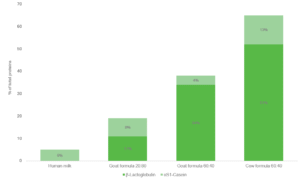
~5% of total protein ~20% of total protein ~38% of total protein ~65% of total protein
Beta-casein A2-type A2-type A2-type A1-type and A2-type
Milk fat 100% ~50% <5% <5%
sn-2 palmitic acid ~70% ~30% ~5%** ~5%**
MFGM Naturally present Naturally present, ~50% of human milk levels, near intact May contain MFGM fragments from whey May contain MFGM fragments from whey
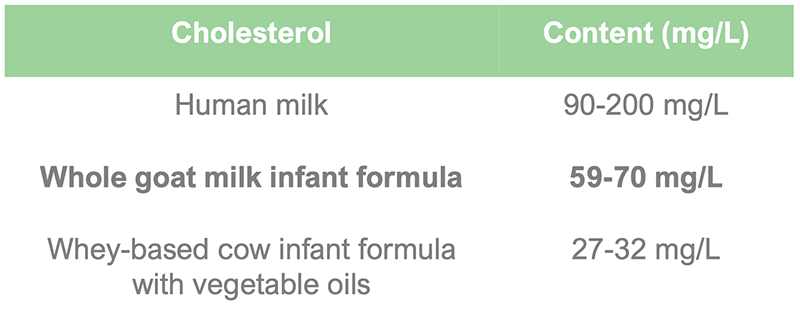
Cholesterol 90-200 mg/L 59-70 mg/L Lower than WGMF, likely similar to standard cow formula 27-32 mg/L
Nucleotides Naturally present, ~77 mg/L Naturally present, ~40 mg/L Naturally present*** Not naturally present
Oligosaccharides
(prebiotics)
Naturally optimum levels ~6x higher than cow*** ~6x higher than cow*** Low

MFGM = Milk fat globule membrane
*Typical values reported in the literature, exact composition will vary by brand
**Higher if enzymatically processed sn2-palmitate vegetable oil is used
***Levels in finished goat milk formula TBC

Naturally soft and easy to digest protein1-5
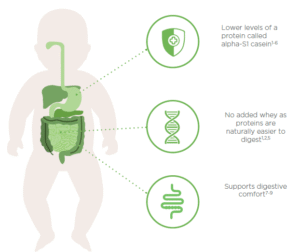
  • Compared to cow milk, goat milk has lower levels of a protein called alpha-S1 casein, which makes goat milk easier to digest as it naturally forms a softer curd in the stomach.1-6
  • Like breastmilk, goat milk is naturally A2. A2 milk has been shown to support digestive comfort, when compared to traditional cow milk containing A1 beta-casein.7-9
  • Standard cow milk formula is whey-adjusted, meaning whey proteins are added to the formula to make it easier to digest.
Capricare® whole goat milk formula does not need to add whey as the proteins are already easy to digest. Not adding whey means Capricare® contains lower levels of beta-lactoglobulin, a key allergen that is not present in breastmilk.1,2,5


~50% of the fat source is goat milk fat, naturally delivering bioactives
  • Naturally delivers Milk Fat Globule Membrane (MFGM) – MFGM delivers key components that support brain development and gut maturation10-12
  • Delivers naturally higher levels of sn-2 palmitic acid* for softer stools13
  • Naturally delivers around 2x cholesterol levels* – cholesterol is essential for brain development10-12
Minimally processed
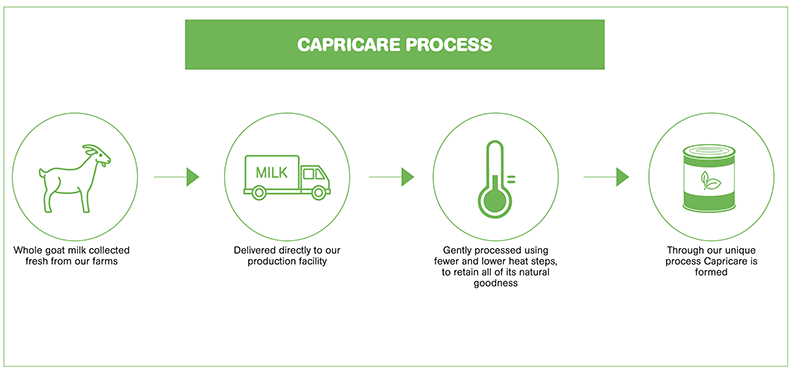
  • Capricare® is made from only fresh whole goat milk as a source of protein, with no processed whey
  • Made using a gentle processing technique to protect the natural goodness of goat milk, and delivers a good tasting formula that babies love


References

1 Wang et al. Food Hydrocolloids 2019, 96, 161-170
2 Amalfitano et al. J Dairy Sci 2020, 103, 11190-11208
3 Liao et al. J Proteome Res 2017, 16, 4113-4121
4 Internal data, unpublished
5 Li et al. Foods 2022, 11, 1737
6 Ye et al. Int Dairy J 2019, 97, 76-85
7 Rahmatalla et al. Front Genet 2022, 13, 995349
8 Sheng et al. J Pediatr Gastroenterol Nutr 2019, 69(3), 375-382
9 Brooke-Taylor et al. Adv Nutr 2017, 8(5), 739-748
10 Demmelmair et al. Nutrients 2017, 9, 818
11 Gallier et al. Nutrients 2020, 12, 3486
12 Hernell et al. J Pediatr 2016, 173S, S60-5
13 Miles & Calder et al. Nutr Res 2017, 44, 1-8

*When compared to cow milk formula

Digestive Comfort

Several studies support the natural softness and digestive benefits of whole goat milk formula

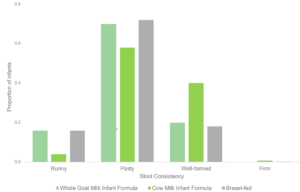
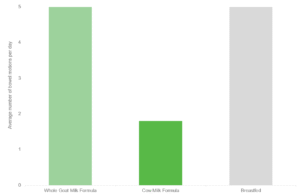
A prospective cohort study of 976 Korean infants from birth to 12 months found that whole goat milk formula led to more similar stool consistency and frequency than breastfed infants, compared to cow milk formula.1


Whole goat milk formula, cow milk formula and breastmilk comparison of stool frequency and consistency1

Adapted from Han Y, et al. 20111

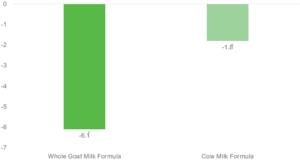
Mean reduction in regurgitation frequency (times/week) from randomisation to 4 weeks

A trend towards a greater reduction in parent–reported infant regurgitation was observed in infants transitioning from breastfeeding to whole goat milk formula, compared to standard cow milk formula. A total of 80 infants were randomised to investigate the impact on regurgitation frequency over 4 weeks when transitioning from breastfeeding to formula feeding. Despite a higher regurgitation frequency in the whole goat milk formula group at baseline, both groups had similar regurgitation frequency after 4 weeks.2

Adapted from Suteerojntrakool O et al. 2025 2
*P =0.09. Results show a trend towards a significance only.

Unique attributes of Capricare® for digestive comfort

Naturally soft curd due to lower alpha-S1 casein levels

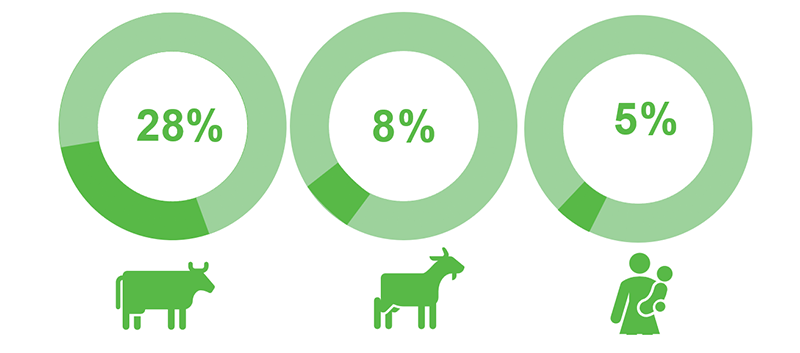
Human milk naturally forms a soft curd in the stomach thanks to its naturally lower levels* of a protein called alpha-S1 casein (~5% of protein5). Like human milk, the goat milk used in Capricare® also has naturally lower levels* of alpha-S1 casein (~8%4), also leading to a naturally soft curd.5 Cow milk forms a harder curd5, due to higher levels alpha-S1 casein (~28%6) – adding whey to cow formulas helps soften the curd5 and makes it easier to digest for infants. Whole goat milk formula is naturally soft without needing to add whey.

Goat milk used in Capricare® is naturally lower in alpha-S1 casein 3-6, making it easier to digest

alpha-S1 casein as % of total protein

Naturally A2 for digestive comfort

Just like human milk, goat milk naturally only contains A2-type beta caseins and no A1-type beta caseins.7


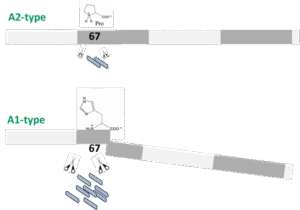
A1-type beta caseins are only present in bovine milk and have been linked to digestive discomfort8,9 and gut inflammation.9 This is because A1-type beta caseins in cow milk release high levels of a peptide called beta-casomorphin 7 (BCM-7), which has been linked to the negative effects of A1-type beta caseins.9


Milk only containing A2-type beta casein has been shown to release no or very little BCM-79 and provides benefits for digestive comfort, stool consistency and frequency.8,9
A2 beta-casein contains Proline at position 67, while A1 beta-casein has Histidine, making A1 more susceptible to enzymatic cleavage and the release of BCM-7 during digestion.

Higher levels of sn-2 palmitic acid* for softer stools

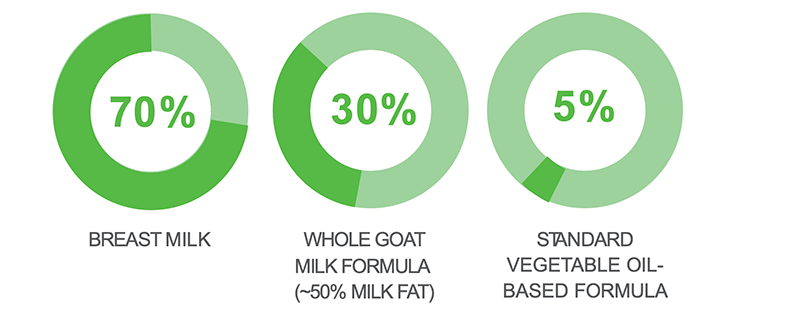
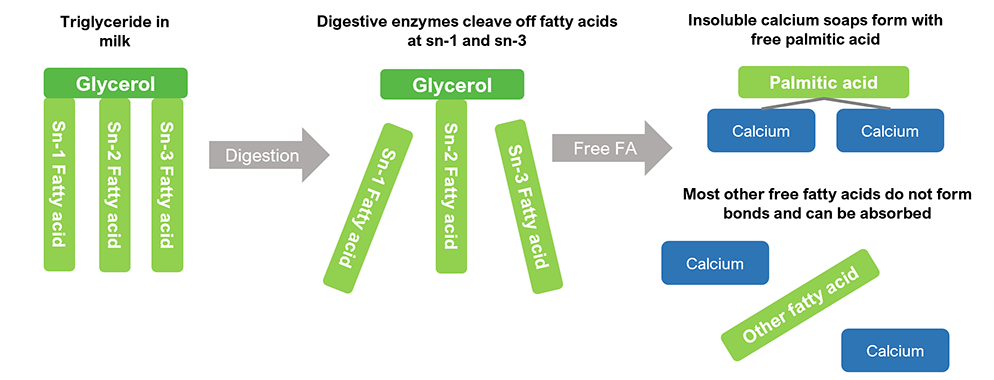
Capricare® contains ~50% fat from the goat milk source naturally providing higher levels of palmitic acid in the sn-2 position**10, which has been linked to digestive benefits, including softer stools, and less crying.11


When palmitic acid is in the sn-1 or sn-3 position of a triglyceride (the main form of fat), it is cleaved by digestive enzyme and becomes a free fatty acid that then forms soaps with calcium, making both the calcium and fatty acid unavailable to be absorbed by the body. This leads to harder stools and lowers calcium absorption. Palmitic acid in the sn-2 position does not form soaps and gets easily absorbed.11
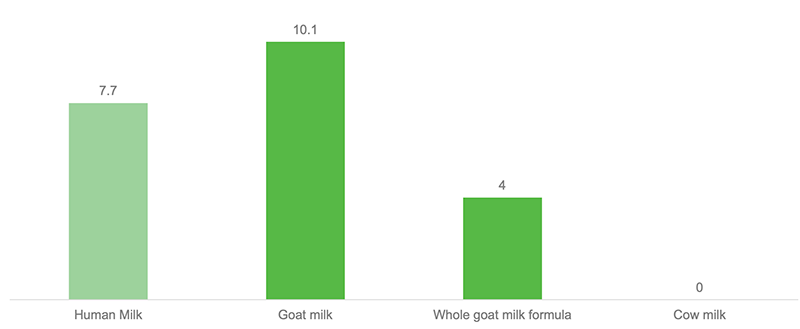
Proportion of palmitic acid in the sn-2 position


References

1 Han et al. Nutr Res Pract 2011;5(4): 308-312
2 Suteerojntrakool et al. (2025, February 20-22). [Oral presentation abstract]. Nutrition & Growth Conference, Athens, Greece
3 Liao et al. J Proteome Res 2017;16: 4113-4121
4 Data on File. Unpublished.
5 Wang et al. Food Hydrocolloids 2019;96: 161-170
6 Amalfitano et al. J Dairy Sci  2020;103: 11190-11208
7 Rahmatalla et al. Front Genet 2022;13: 995349
8 Sheng et al. J Pediatr Gastroenterol Nutr 2019;69(3): 375-3
9 Brooke-Taylor et al. Adv Nutr 2017;8(5): 739-748
10 Gallier et al. Nutrients 2020;12: 3486
11 Miles & Calder. Nutr Res 2017;44: 1-8

*When compared to standard formulas with vegetable oil as source of fat
**When compared to cow milk formula

Natural Allergy Benefit

Capricare® whole goat milk formula is lower in key allergens and may reduce the risk of eczema

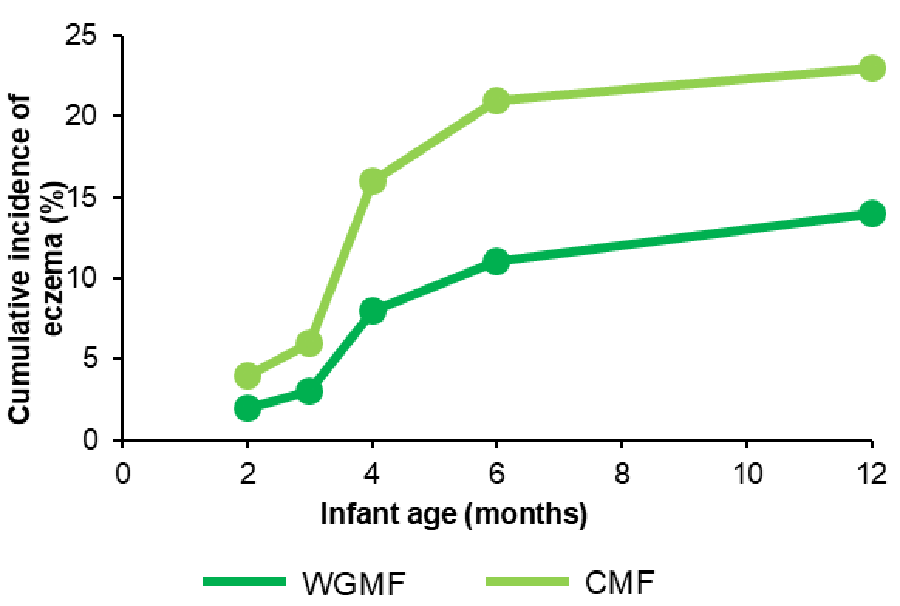
A post hoc analysis of a randomised controlled trial of 200 formula-fed infants to assess growth and nutritional status, showed a trend of lower cumulative incidence of eczema with whole goat milk formula, compared to standard cow milk formula.1

Lower in key allergens

There are 2 key allergens in standard cow and goat milk formulas; alpha-S1 casein and beta-lactoglobulin.2,3,4


Human milk does not contain the key allergen, beta-lactoglobulin. Beta-lactoglobulin is found in the whey fraction of cow and goat milk. When whey is added to a milk formulation; ie ‘whey-adjusted’, the beta-lactoglobulin component of that formula is increased. Unlike cow milk formula, Capricare whole goat milk formula has no whey added and therefore, has a lower amount of the key allergen, beta-lactoglobulin, compared to whey-adjusted formulas.2-4
  • Capricare® whole goat milk formula contains ~11% beta-lactoglobulin of total protein.5
  • Standard whey-adjusted goat and cow milk formulas contain >34% beta-lactoglobulin of total protein.5

Like human milk, Capricare® whole goat milk formula contains lower levels of alpha-S1 casein, when compared to standard cow milk formula.6 Furthermore, when alpha-S1 casein is sourced from goat milk, it has been shown to be less sensitising compared to alpha-S1 casein sourced from cow milk,7 suggesting that it is not only the lower levels of alpha-S1 casein, but also the goat milk source that supports the allergy benefits of Capricare® whole goat milk formula.

Cumulative incidence of eczema over 12 months in infants fed whole goat milk formula or standard cow milk formula

Comparison of amounts of key allergens, beta-lactoglobulin and alpha-S1 casein, in human milk, whole goat milk formula and whey adjusted goat and cow milk formulas*.2-5

*Typical levels calculated based on levels reported in the scientific literature and assuming a 60:40 whey to casein ratio

More efficient digestion of key allergens

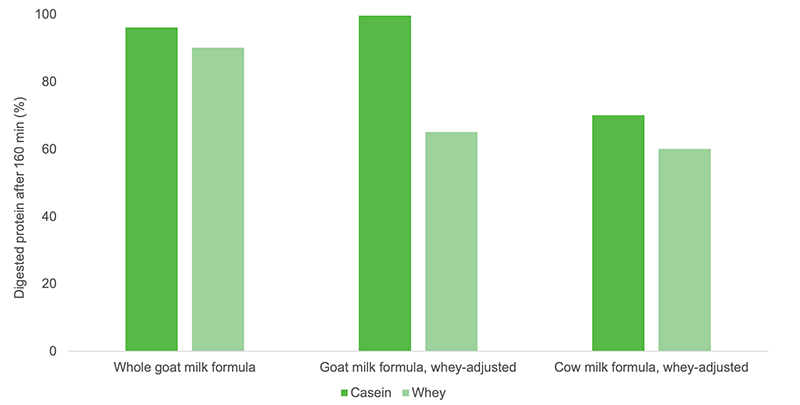
Caseins and beta-lactoglobulin from whole goat milk formula are more efficiently digested than those from cow milk formula (in vitro model)8, and beta-lactoglobulin is also more efficiently digested in whole goat milk formula compared to whey-adjusted goat and cow formula. This can further lower the allergic trigger potential of whole goat milk formula. Calculated assuming 60% whey with same composition as reported in Amalfitano et al. (2020)2 and Li et al. (2022).3


Casein and whey proteins are more effectively digested in whole goat milk formula8


Lower triggering potential in those with hypersensitivities

While goat milk formulas are not suitable for infants or toddlers with established IgE-mediated cow milk allergy (CMA) due to possible cross-reactivity, lower levels of key allergens and more efficient digestion may benefit those with hypersensitivities. Lower levels of alpha-S1 casein, for example, have been shown to lead to a more muted inflammatory reaction in sensitised mice compared to exposure to high levels.9


References

1 Zhou et al.  Br J Nutr 2014;111: 1641-1651.
2 Amalfitano et al. J Dairy Sci  2020;103: 11190-11208
3 Li et al.  Foods 2022;11: 1737
4 Jensen et al. World Allergy Org J 2022;15: 100668
5 Data on File. Unpublished.
6 Wang et al. Food Hydrocolloids 2019;96: 161-170
7 Zhang et al. Food Funct 2022;13: 6484-97
8 Ye et al. Int Dairy J 2019;97: 76-85
9 Hodgkinson et al. J Dairy Sci 2012;95: 83-90

Natural Bioactives

Capricare® whole goat milk formula supports key benefits, by design. Made with whole goat milk as the only source of protein and ~50% of fat from the goat milk fat, Capricare® naturally delivers components that support the growth and development of infants and toddlers.

Naturally delivers Milk Fat Globule Membrane (MFGM)

The milk fat in whole goat milk formula naturally delivers MFGM. MFGM from human milk, and other mammal milks such as goat milk, contains key components such as glycophospholipids, sphingolipids, cholesterol and bioactive proteins.1,2

These components have been linked to key benefits1-3:

  • MFGM proteins have antiviral, antibacterial and immunomodulatory properties
  • Phospholipids and cholesterol are important for brain development
  • Sphingolipids in MFGM are involved in gut maturation
  • MFGM has also been found to support gut microbiota development

Most infant formulas add vegetable oil as the fat source, therefore do not naturally deliver MFGM. Our research shows that Capricare® whole goat milk formula contains near intact MFGM, delivering all of its beneficial components.2

MFGM from goat milk fat delivers phospholipids, sphingomyelin and bioactive proteins

Cholesterol is important for the development of the brain and nervous system2,3

Capricare® whole goat milk formula naturally delivers higher levels of cholesterol than formulas with a fat source from vegetable oil. Cholesterol is essential for the development of myelin sheaths in the brain and nervous system.2,3 Evidence shows that infants fed standard cow milk formula with a fat source from vegetable oil have lower serum cholesterol levels compared to breastfed infants.3

Whole goat milk formula delivers around 2x the cholesterol levels of standard formula2

Higher levels of sn-2 palmitic acid for softer stools

Whole goat milk formula naturally delivers higher levels of sn-2 palmitic acid (~30% of palmitic acid) thanks to its high goat milk fat content compared to standard formula with fat sourced from vegetable oil (~5% of palmitic acid).2


Naturally delivers nucleotides for the developing immune system5,6

Similar to human milk, goat milk naturally contains nucleotides.7,8 Capricare® whole goat milk formula naturally delivers meaningful amounts of nucleotides, which have been shown to support a developing immune system.5,6 Nucleotides modulate the immune response and evidence suggests they improve immune response to vaccinations, and infants receiving nucleotide-supplemented infant formula had fewer episodes of diarrhoea.5,6 Cow milk does not naturally contain significant levels of nucleotides.

Goat milk naturally delivers nucleotides8
Naturally higher in milk oligosaccharides for healthy gut microbiota9,10

Human Milk Oligosaccharides (HMOs) are complex sugars (oligosaccharides) found in high concentrations in human milk. They are the third most abundant component in human milk, where they serve as prebiotics, selectively nourishing beneficial gut bacteria like Bifidobacteria, which helps shape a healthy infant microbiome. They have other important roles, such as protecting against pathogens, modulating immune responses, and supporting brain development.11


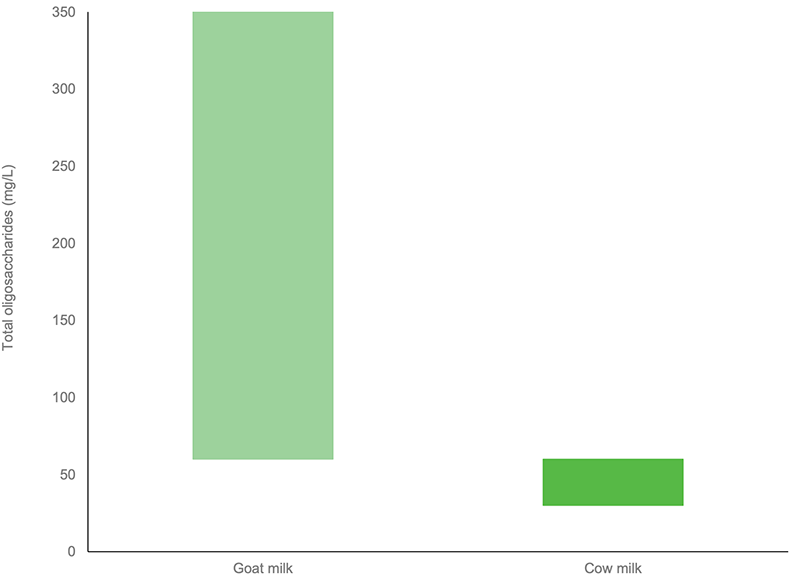
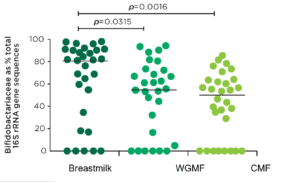
The scientific literature reports that goat milk naturally contains up to 6x higher levels of oligosaccharides, than cow milk, including oligosaccharides that are similar to those in human milk.12,13 Studies investigating the impact of whole goat milk on the gut microbiota demonstrated that infants fed whole goat milk formula had a gut microbiota more similar to a breastfed infant, when compared to cow milk formula. Whole goat milk formula was shown to be bifidogenic.9,10
Goat milk naturally contains higher levels of oligosaccharides12


*Without added oligosaccharides

Difference in presence of bifidobacteria in infants fed breastmilk, whole goat milk formula and cow milk formula


References

1 Demmelmair et al. Nutrients 2017;9: 818
2 Gallier et al. Nutrients 2020;12: 3486
3 Hernell et al. J Pediatr 2016;173S: S60-5
4 Miles & Calder. Nutr Res 2017;44: 1-8
5 Scientific Committee on Food, 2023. Report of the Scientific Committee on Food on the Revision of Essential Requirements of Infant Formulae and Follow-on Formulae.
6 Gutierrez-Catrellon et al. Br J Nutr 2007;98(Suppl 1): S64-7
7 European Food Safety Authority. EFSA J 2014;12(7): 3760
8 Prosser et al. Int J Food Sci Nutr 2008;59(2): 12-133
9 Tannock et al. Appl Environ Microbiol 2013;79: 3040-3048
10 Gallier et al. Front Nutr 2020;7: 608495
11 Corona et al. Children 2021;Sep 14;8(9):804
12 Van Leeuwen et al. J Agr Food Chem 2020;68: 13469-13485
13 Donavan & Comstock. Ann Nutr Metab 2016;69(S2): 42-51

Safe, Effective and Loved by Babies

Capricare® is safe, well tolerated and provides feeding time contentment for mums, dads and baby while supporting the normal healthy growth of an infant.

Supports healthy infant growth

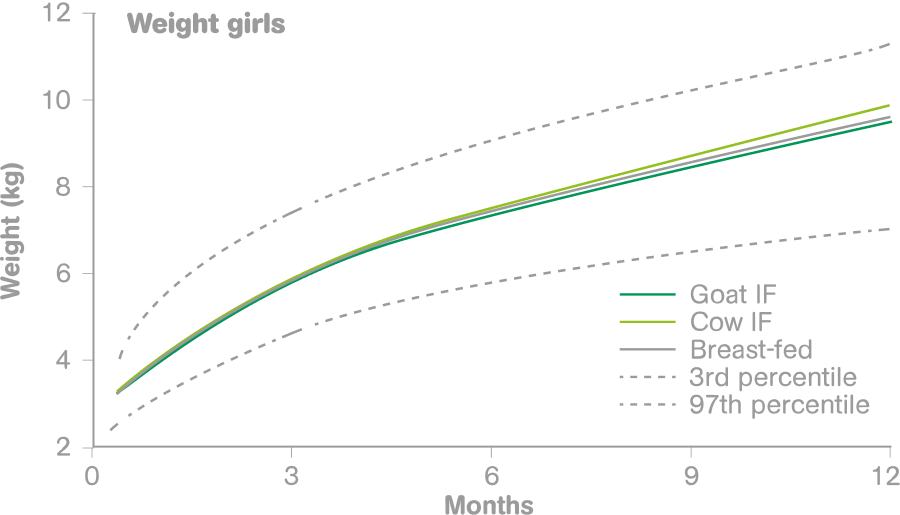
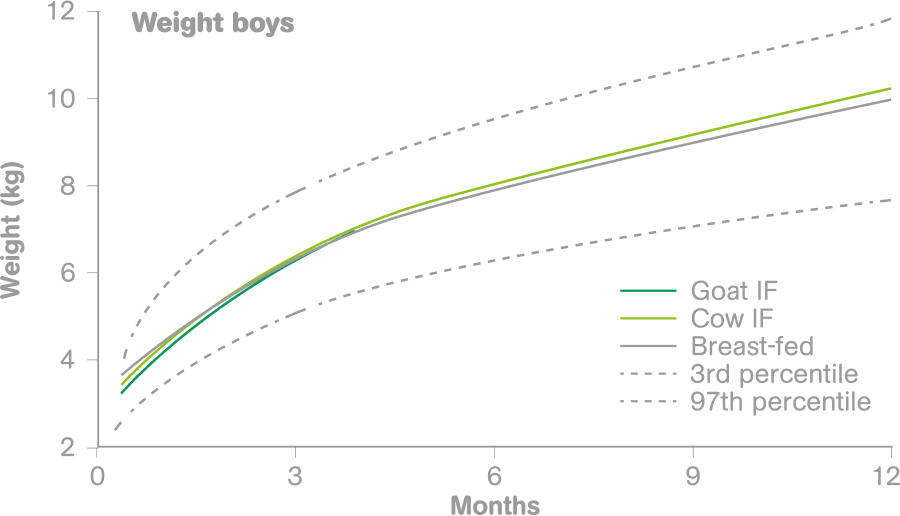
Based on studies of formulations similar to Capricare®, the European Food Safety Authority (EFSA) determined goat milk to be a suitable source of protein for infant formula, without the formula requiring adjustment to the protein profile.1 Whole goat milk formula has been shown to support normal growth of formula-fed infants, with weight, length, head circumference, weight-for-length and body composition within the normal growth range and comparable to breastfed infants and those fed cow milk infant formula.2-4

It has also been shown to support healthy plasma amino acid levels, is well tolerated and there were no differences in adverse health outcomes between formula groups.2-4

The body composition of infants fed whole goat milk formula is comparable to that of breastfed infants

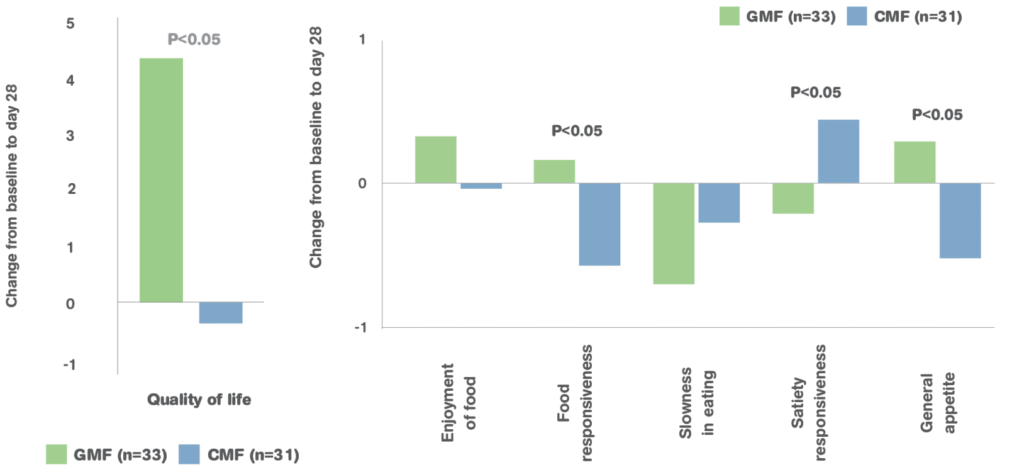
Switching to Capricare® may support an infant’s improved quality of life

The CHARLIE Study showed that infants who switched from cow milk formula to Capricare® experienced improved food responsiveness, greater general appetite, and better quality of life than infants fed cow milk formula.5


Adapted from Jung C, et al. 2023.5

BEBQ: Baby Eating Behaviour Questionnaire; CMF: cow milk formula; WGMF: whole goat milk formula; QALIN: Quality of life of the infant.


References

1 EFSA Panel on Dietetic Products, Nutrition and Allergies (NDA). EFSA J. 2012;10(3):2603. [18pp.].
2 Zhou SJ, et al. Br J Nutr. 2014; 111:1641–1651.
3 Grant C, et al. J Paediatr Child Health. 2005;41(11):564–568.
4 Han Y, et al. Nutr Res Pract. 2011;5(4):308–312.
5 Jung C, et al. Nutrients. 2023;15(18):4057.

EFSA: European Food Safety Authority.