Aperçu
L'étude CHARLIE visait à comprendre les préférences des nourrissons pour la formule de lait de chèvre entier (WGMF) et la formule de lait de vache (CMF) en utilisant des outils de recherche et de pratique clinique évaluant le comportement alimentaire et la qualité de vie. Les nourrissons nourris avec du WGMF ont montré un meilleur appétit général et une meilleure qualité de vie que les nourrissons nourris avec du CMF. Il n'y avait pas de différence dans le plaisir de manger. Les résultats suggèrent que le WGMF est une alternative attrayante au CMF à base de lactosérum.
Méthodes
Investigateur principal : Dr Marc Bellaïche, Gastro-entérologie et Nutrition Pédiatrique, Hôpital Robert-Debré, France
Approbation éthique : Enregistrée sur ClinicalTrials.gov (NCT03488758)
Formulations : Préparation pour nourrissons à base de lait de chèvre entier** (rapport lactosérum/caséine de 20:80 ; 48 % de matières grasses totales provenant du lait de chèvre ; sans lactosérum ajouté) et préparation pour nourrissons à base de lait de vache (rapport lactosérum/caséine de 60:40 ; 22 % de matières grasses totales provenant du lait de vache).
L'étude CHARLIE était un essai contrôlé randomisé, en double aveugle et multicentrique. Des nourrissons à terme en bonne santé, exclusivement ou partiellement nourris au lait artificiel, âgés de moins de quatre mois, ont été recrutés à Paris ou aux alentours, en France. Les nourrissons ont été passés au WGMF (n=33) ou au CMF (n=32) à l'inclusion pour une période d'intervention de quatre semaines. Les soignants et les chercheurs ignoraient quelle formule était administrée.
Les nourrissons ont été évalués à l'inclusion et après quatre semaines de consommation de la formule. Le plaisir de manger, la réactivité alimentaire, la lenteur à manger, la réactivité à la satiété et l'appétit général ont été évalués à l'aide du questionnaire validé sur le comportement alimentaire des bébés (BEBQ).2 La qualité de vie des nourrissons, y compris le développement psychomoteur et socio-émotionnel, a été évaluée à l'aide du questionnaire QUALIN.3 Le questionnaire QUALIN est validé pour les enfants de trois mois à trois ans et a été modifié pour supprimer les questions inadaptées aux nourrissons de moins de trois mois. Les difficultés alimentaires ont été évaluées à l'aide de l'échelle d'alimentation de l'Hôpital des enfants de Montréal (MCH-FS ; développée par des pédiatres).
Principales découvertes
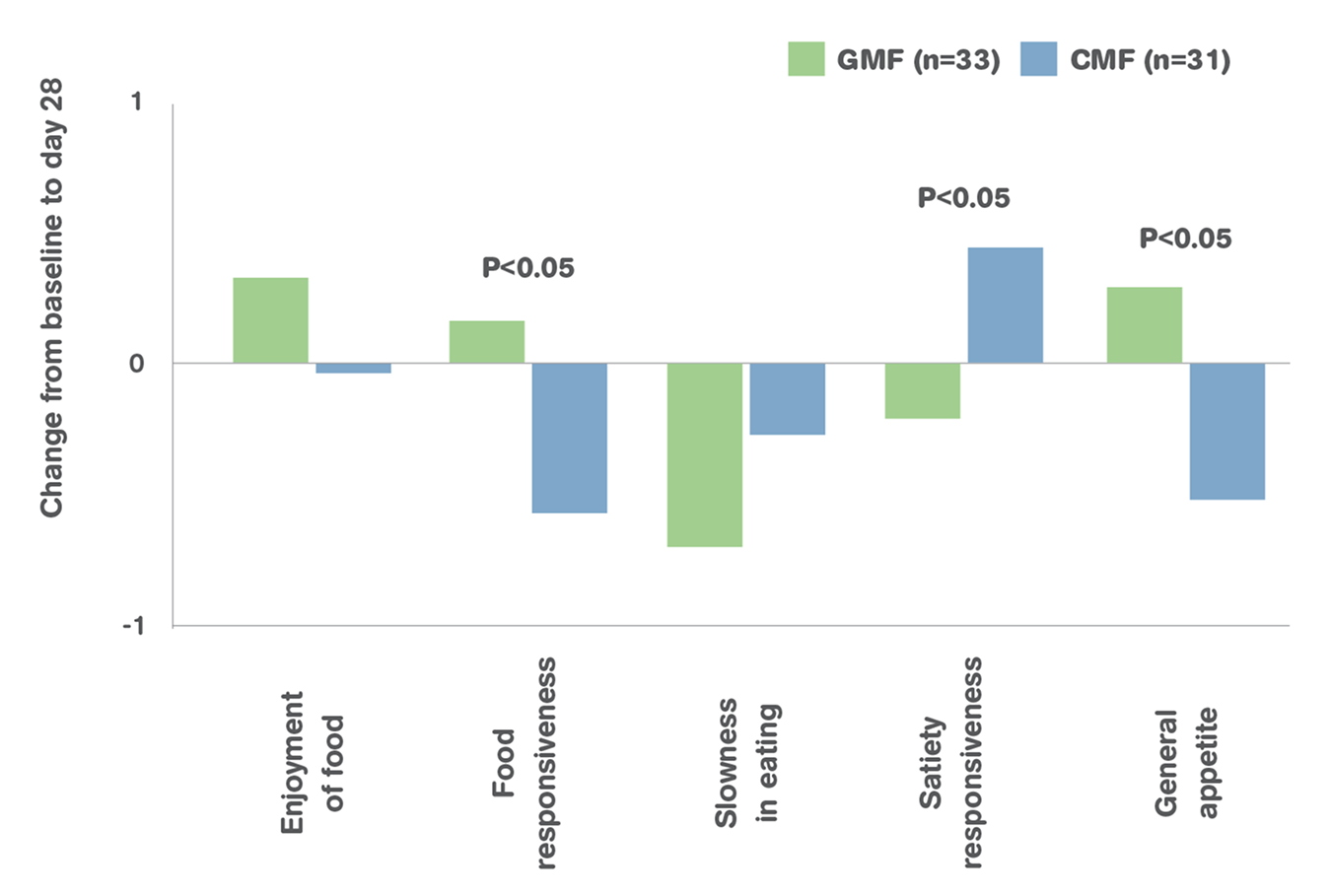
Selon le BEBQ, les nourrissons ont apprécié les préparations de manière égale, et il n'y a pas eu de différence dans le rythme auquel ils ont consommé l'une ou l'autre préparation. Les nourrissons passant à une préparation WGMF ont montré une amélioration de la réactivité alimentaire (envie de manger) et des scores d'appétit général.* Les nourrissons recevant du CMF avaient un score de réactivité à la satiété plus élevé (P=0,049), indiquant qu'ils étaient rassasiés plus rapidement, potentiellement en raison des protéines de lait de vache formant un caillot plus dur dans les conditions acides de l'estomac.4 La croissance des nourrissons dans les groupes WGMF et CMF était équivalente,† suggérant que l'amélioration de l'appétit général des nourrissons consommant du WGMF n'indique pas de surconsommation ou une prise de poids plus élevée.
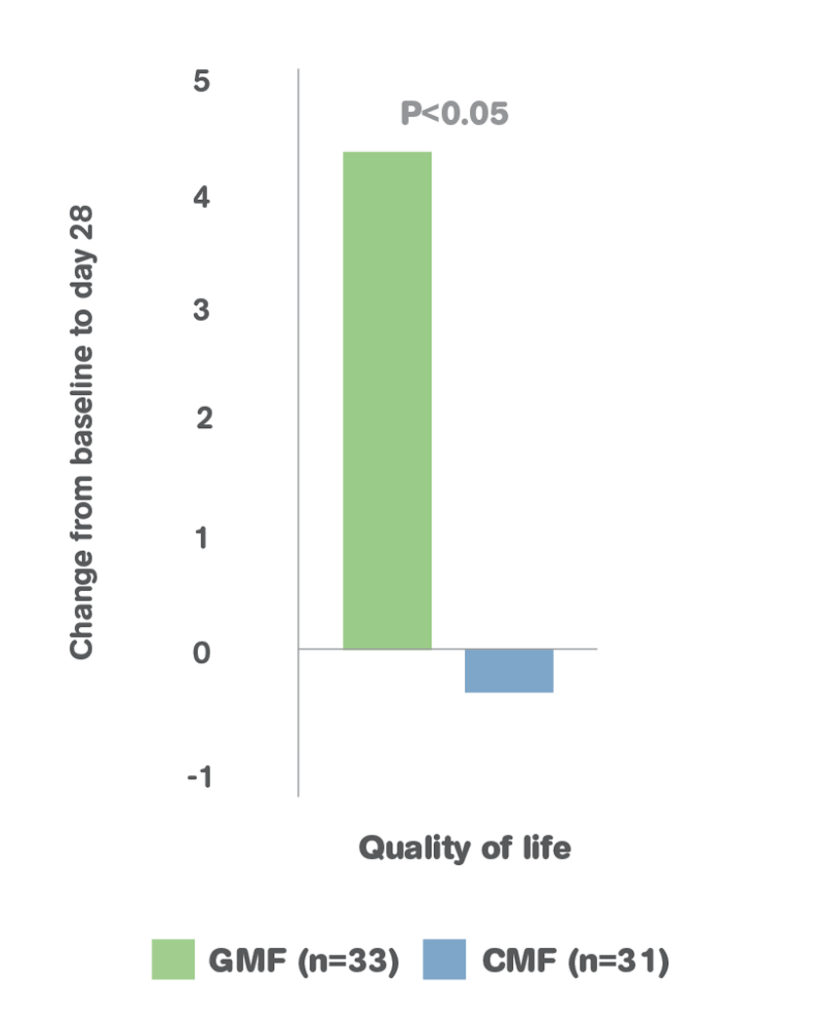
La qualité de vie des nourrissons qui sont passés au WGMF était supérieure à celle des nourrissons nourris au CMF.‡ Le questionnaire QUALIN est basé sur des critères utilisés par les parents, les aidants, les pédiatres et les infirmières lorsqu'ils réfléchissent à la qualité de vie d'un bébé. Il n'y a pas eu de différence dans les difficultés d'alimentation entre les groupes recevant du WGMF et du CMF (MCH-FS ; seuls quelques nourrissons avaient des difficultés d'alimentation).
Conclusion
Les nourrissons nourris au WGMF étaient plus enclins à le consommer, avaient un meilleur appétit, étaient plus satisfaits et moins difficiles. Le passage d'une formule à base de lait de vache à une formule à base de lait de chèvre pourrait améliorer la qualité de vie des nourrissons, faciliter l'alimentation ou stimuler l'appétit.
Le questionnaire QUALIN a été adapté pour les nourrissons de moins de trois mois. L'étude a été interrompue en raison de la pandémie de COVID, ce qui a limité le nombre de nourrissons recrutés.
Références
CMF : formule à base de lait de vache ; WGMF : formule à base de lait de chèvre entier.
**Formule Capricare avec DHA et ARA ajoutés
*Amélioration de la réactivité alimentaire (WGMF : 0,15 ±1 ; CMF : -0,48 ±0,81 ; P=0,010) et meilleur appétit général (WGMF : 0,26 ±1,2 ; CMF : -0,48 ±0,88 ; P=0,012).
†Poids à J28±3 (g) WGMF : 5540,1±1213,2 ; CMF : 5104,6±1500,7 ; P=0,20. Longueur à J28±3 (cm) WGMF : 58,9±4,4 ; CMF : 58,7±4,5 ; P=0,85.
‡Meilleure qualité de vie (WGMF : 4,6 ±9,4 ; CMF : -0,40 ±7,6 ; P=0,03).
1 Jung et al. Nutrients. 2023;15(18):4057.
2 Llewellyn et al. Appetite. 2011;57(2):388–396.
3 Manificat et al. Arch Pediatr. 2000;7(6):605–614.
4 Hodgkinson et al. Food Chem. 2019;276:619–625.